AI in Business: How Custom AI Agents Are Transforming Smarter Decision-Making — Insights from Zeeshan Hayat

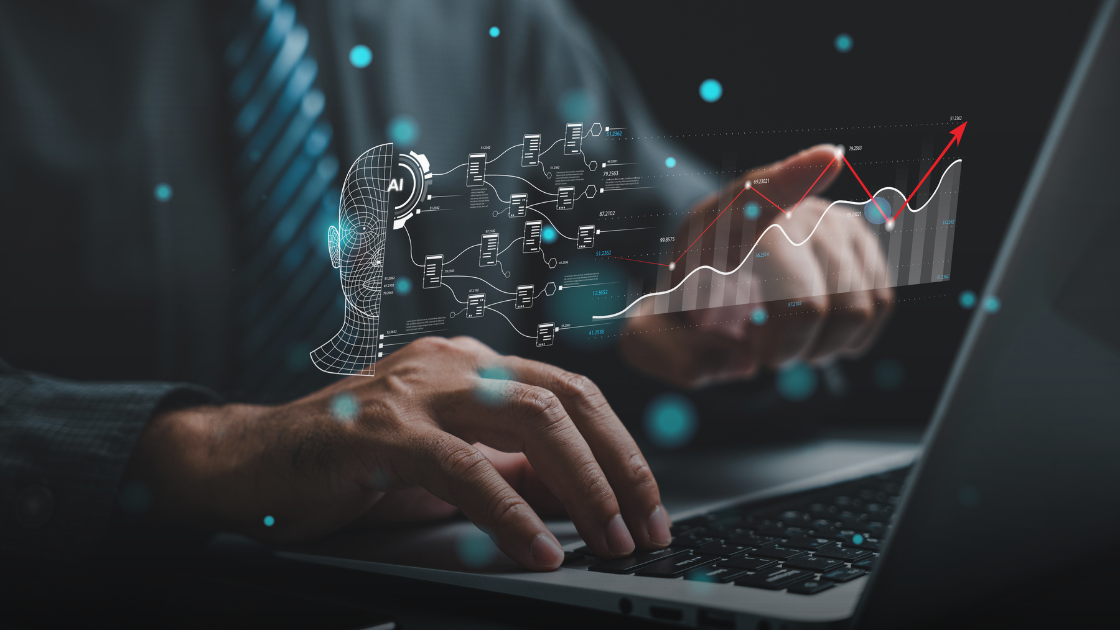
In the modern business landscape, data has become both a powerful asset and a growing challenge. Organizations generate vast amounts of information every day, but turning that data into meaningful decisions remains difficult. The rise of custom AI agents is changing this reality. The perspective associated with Zeeshan Hayat highlights how AI-driven systems are transforming business decision-making by making it faster, more accurate, and more scalable.
At the center of this transformation is the shift from manual decision-making to intelligent automation. Traditional business processes often rely on human analysis, which can be slow and limited by cognitive capacity. Custom AI agents, however, can process large datasets in real time, identify patterns, and generate actionable insights. This enables businesses to respond quickly to market changes and make more informed decisions.
A key advantage of custom AI agents is their ability to support data-driven strategy. Instead of relying on assumptions or fragmented reports, organizations can use AI systems to analyze customer behavior, operational performance, and market trends. Zeeshan Hayat’s perspective emphasizes that this shift allows businesses to move from reactive decision-making to predictive and proactive strategy.
Custom AI agents are particularly powerful because they are tailored to specific business needs. Unlike generic tools, these systems are designed to align with an organization’s unique goals, workflows, and industry requirements. This customization enables more precise insights and more relevant recommendations, improving overall decision quality.
One of the most significant impacts of AI agents is in operational efficiency. Businesses often struggle with repetitive tasks, fragmented communication, and inefficient workflows. AI agents can automate routine processes such as data entry, reporting, customer support, and scheduling. This reduces operational burden and allows human teams to focus on higher-value strategic work.
Zeeshan Hayat’s approach highlights that efficiency is not just about speed—it is about optimization. AI agents help organizations streamline processes, eliminate bottlenecks, and ensure consistency across operations. This leads to improved productivity and reduced costs.
Another major transformation comes in customer experience management. Custom AI agents can analyze customer interactions in real time, predict needs, and personalize responses. This allows businesses to deliver more relevant and timely services. From chat-based support systems to personalized product recommendations, AI enhances engagement and satisfaction.
However, the perspective also emphasizes that technology alone is not enough. While AI improves responsiveness, trust and human connection remain essential. Businesses must ensure that AI-driven interactions are transparent, accurate, and aligned with customer expectations.
A critical area where AI agents are making an impact is decision intelligence. Instead of simply providing raw data, AI systems interpret information and suggest actionable steps. This helps leaders make faster and more confident decisions. Zeeshan Hayat highlights that decision intelligence represents a shift from information access to intelligent guidance.
For example, AI agents can forecast demand trends, identify financial risks, and recommend resource allocation strategies. This predictive capability allows businesses to plan more effectively and reduce uncertainty in complex environments.
Another important benefit is scalability in decision-making. As businesses grow, the volume of decisions increases exponentially. Human teams alone cannot manage this complexity efficiently. Custom AI agents scale decision-making capacity by handling large volumes of analysis simultaneously, ensuring consistency and accuracy across the organization.
Zeeshan Hayat’s perspective also emphasizes the importance of human-AI collaboration. AI agents are not designed to replace human leadership but to enhance it. While AI handles data processing and pattern recognition, humans provide judgment, creativity, and ethical oversight. This collaboration creates a balanced system where both technology and human intelligence contribute to better outcomes.
Risk management is another area where AI agents provide significant value. Businesses operate in uncertain environments where financial, operational, and market risks are constant. AI systems can detect anomalies, identify potential threats, and provide early warnings. This allows organizations to take proactive measures before issues escalate.
However, effective use of AI requires responsible implementation. Zeeshan Hayat’s perspective highlights that businesses must ensure transparency, data security, and ethical use of AI systems. Trust in AI depends on how responsibly it is designed and deployed.
Another key insight is the role of AI in strategic planning. Custom AI agents help organizations simulate scenarios, evaluate outcomes, and test strategies before implementation. This reduces uncertainty and improves planning accuracy. Businesses can explore multiple options and choose the most effective path forward based on data-backed insights.
In conclusion, custom AI agents are transforming how businesses approach decision-making by turning complex data into clear, actionable intelligence. The perspective associated with Zeeshan Hayat highlights that this transformation is not just technological—it is strategic. By combining AI-driven insights with human leadership and ethical responsibility, organizations can achieve smarter, faster, and more scalable decision-making. The future of business lies in this powerful integration of intelligence, automation, and human insight, enabling companies to thrive in an increasingly complex world.
About The Hayats